Sign up for WAE Emails


“Water- a bequest of nature” bases all innovations in curbing water crisis to make our blue planet green and sustainable.
“For as the rain and the snow come down from heaven and do not return there but water the earth, making it bring forth and sprout, giving seed to the sower and bread to the eater.” (Isaiah 55:10)
Rainfall- a great planetary phenomenon forms a part of the hydrologic cycle that carries water from the oceans to land and back again. While the atmosphere transports the ocean’s water to the mainland, only 0.001 per cent of Earth’s water is found in the atmosphere at any given time! What we experience as rain or snow is the water that recycles many times per year among the terrestrial, aquatic and atmospheric environments.
Reliant upon the location of mountain ranges and direction of the rain-bearing winds, the rainfall decides the climate of India. With five rainfall zones ranging from Extreme Precipitation Regions experiencing 400cm of rainfall to Desert and Semi-desert Regions having below 20cm rain, India has ‘tropical monsoon’ type of climate. Western Ghats, Nagaland, Manipur, Tripura and West Bengal are encased by wet evergreen forests as they fall in the Heavy Precipitation Regions. Moderate and Scanty Precipitation Regions experience rainfall as high as 300cm to merely 50cm. Immense rainfall dependence makes it pertinent to capitalize on the ‘boon of monsoon’ through Rainwater Harvesting!
Rainwater Harvesting Technology
Rainwater harvesting is a technique of collection and storage of rainwater at the surface or in subterraneous aquifer before it is lost as surface runoff. It is a viable non-conventional solution to counter the growing menace of water extremities since accumulating water from rain does not exhaust our existing surface and groundwater sources. The idea behind rainwater harvesting is to draw water from the yearly hydrologic cycle as precipitation is a primary source of freshwater on Earth.
Whether or not to install rainwater harvesting technology in a particular region depends on various factors. First is the hydrological regime pertaining to the number of rain days and magnitude of rainfall in that area. Second is the accessibility and reliability of the existing water supplies. Third, are the limitations born from the local geo-hydrological settings like nature of soil and land cover on the groundwater recharge potential. Also, the aggregate local demand of water aids in deciding the practicality and feasibility of rainwater harvesting. In order to augment existing water supply, the techniques of rainwater harvesting can be broadly classified into two categories depending on the catchment areas.
Rainwater Harvesting techniques for augmenting existing water supply
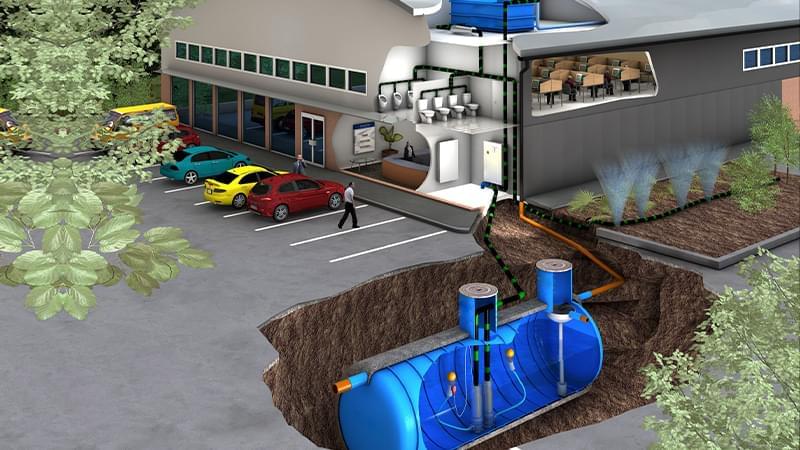
Rooftop Catchments: Rainwater harvesting in the urban areas can be done through rooftop catchments at the organizational level and through ground catchments at the community level. These catchments are basically structural interventions to impound excess runoff. The quantity of water harnessed depends on the area of catchment and the annual average rainfall of the region. Then there are storage structures built to arrest the runoff at or around the site. The high level of evaporation and evapotranspiration during dry seasons affect soil infiltration capacity and depletes the quantity of collected water. In order to ensure the minimal quantitative loss, these storage structures ought to be efficiently constructed. The final component of rainwater harvesting technology is the distribution and utilization system which may include a hose, a channel, pipes, perforated tubes etc. directing the runoff to the point of use.
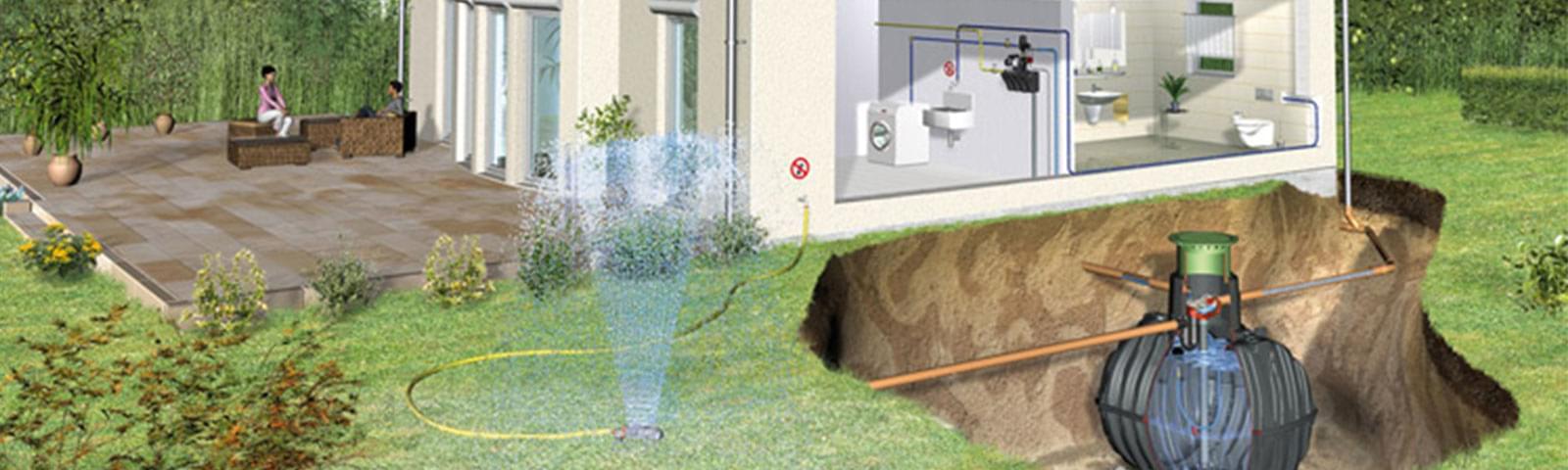
A number of rooftop RWH systems have been developed and adopted in India. The rooftop collection of rainwater prevents it from getting polluted due to its remoteness from the ground. Storage tanks made with plastic, brick or ferro-cement, vinyl bladders, fibre-resin recycled plastic containers like fruit-juice tanks etc. are installed to harness the rainwater. The water could be stored for months or years in the RW tanks depending on their maintenance and management. The water collected thereafter may be used for both potable and non-potable purposes either directly or after preliminary treatment.
Land surface Catchments: Rainwater can also be collected on the ground through land surface catchments. Retaining the runoff on the ground gives the opportunity to harness water from a larger surface area. At the community level, RWH is done by arresting the flows of small creeks and streams through low-cost dams that form small storage reservoirs on the surface or underground. Since the earthen and brick materials are not watertight, they are prone to high rates of water loss due to infiltration into the ground. Therefore, physical means or chemical treatments are used at times to reduce the soil permeability, to increase the surface runoff and minimize soil erosion rates.
One of the main challenges of RWH arises from the rainfall pattern itself. The ‘Rain God’ bestows short but intense showers on the Indian land followed by long dry spells. Since most of the rainfall occurs in four monsoon months, it poses serious constrictions to the extent the harnessed rainwater could last. So much so, this aberrant behaviour and spatial variability of the precipitation has posed a serious threat to the tropical monsoon climate of India. An analysis of rainfall data for the past five years by the India Meteorological Department highlights the changing pattern of rainfall trends in India. In 2018 itself, 255 districts of the country have received scanty rainfall. The rainfall pattern is so erratic that our country has witnessed 26 major droughts during the period of 1871-2015 when the All India Summer Monsoon Rainfall (AISMR) experienced lesser than the mean rainfall for the country. Therefore, the high volume usage of accumulated rainwater for a longer duration would direct towards the installation of a large scale storage system, incurring huge expenses with respect to the cost of water itself. While poor water management practices continue to fuel the water crisis in the country, it is clear that we need to mitigate its impact at ‘macro level’ through replenishment of the groundwater itself!
Rainwater Harvesting techniques for replenishing groundwater
Above and beyond the usual rainwater storage, the rainwater harvesting technique may also be used for recharging the groundwater artificially. Artificial Recharge is a planned activity of augmenting the existing groundwater volume through increased natural replenishment or percolation of surface waters into the groundwater aquifers. This technique would help supplement the freshwater supplies in urban areas at lower costs and help aid in quantitatively improving the groundwater quality by diluting the concentration of pollutants through the soil layers. The methods of Artificial Recharge may be generally classified in the following categories.
Direct Surface recharge: Where the runoff travels from the land surface to the infiltration basins or aquifers by means of percolation into the subsurface is categorized as Direct Surface recharge technique. The volume of water penetrating the aquifer depends on the area of recharge and the span of water-soil propinquity. This method is cost-effective and convenient to operate and maintain.
Direct subsurface recharge: This method requires lesser land than that in the former technique as deeper aquifers commonly known as injection wells are used to replenish groundwater and are separated from the land surface by materials of low permeability. All the subsurface methods are prone to clogging by suspended solids, biological activity or chemical impurities. Recharge wells are used to dispose of treated industrial wastewaters, to add freshwater to coastal aquifers experiencing saltwater intrusion, and to force water under pressure into permeable bedrock aquifers to arrest land subsidence resulting from the extensive abstraction of groundwater (CGWB, 1994). Direct Surface recharge and Direct subsurface recharge methods may also be juxtaposed together to meet specific recharge needs.
Indirect methods of artificial recharge: These methods including Induced Recharge involve pumping from the aquifer which is hydraulically connected with surface water to augment the groundwater reservoir. In this method, there is no artificial buildup of groundwater storage but only channel of surface water to the pump through an aquifer. Before selecting the site and method of artificial recharge, it is imperative to be acquainted with the geographical and hydrological features of the area.
In India, Tamil Nadu exhibited the success of Rainwater Harvesting with the launch of the Rainwater Harvesting Scheme in 2001 to rejuvenate the water sources and augment groundwater levels in the erstwhile parched southern state. With a fierce initial resistance after the government made it mandatory for all government and residential buildings to install rainwater water harvesting system, the scheme has helped people in the water-starved regions by raising water tables in most neighbourhoods. Besides, many other states in India have passed legislations to mandate rainwater harvesting installations for new constructions.
Monsoons that account for over 70% of the country’s annual rainfall directly impact the Indian economy. A good monsoon raises the growth rate of agricultural GDP while a draught year depresses it. Such vulnerability of the economy could only be strengthened by steadying the water availability and accessibility in the country. What else would be a better way to do that if not by harvesting the mighty monsoon?
END

In our minds, we almost instinctively associate the word ‘Cotton’…

As individuals and as a community, we need to be…

PoU water dispenser purifies waters through reverse osmosis and comprises…

The concept of drinking water fountain is new to India,…

