Sign up for WAE Emails


“Water- a bequest of nature” bases all innovations in curbing water crisis to make our blue planet green and sustainable.
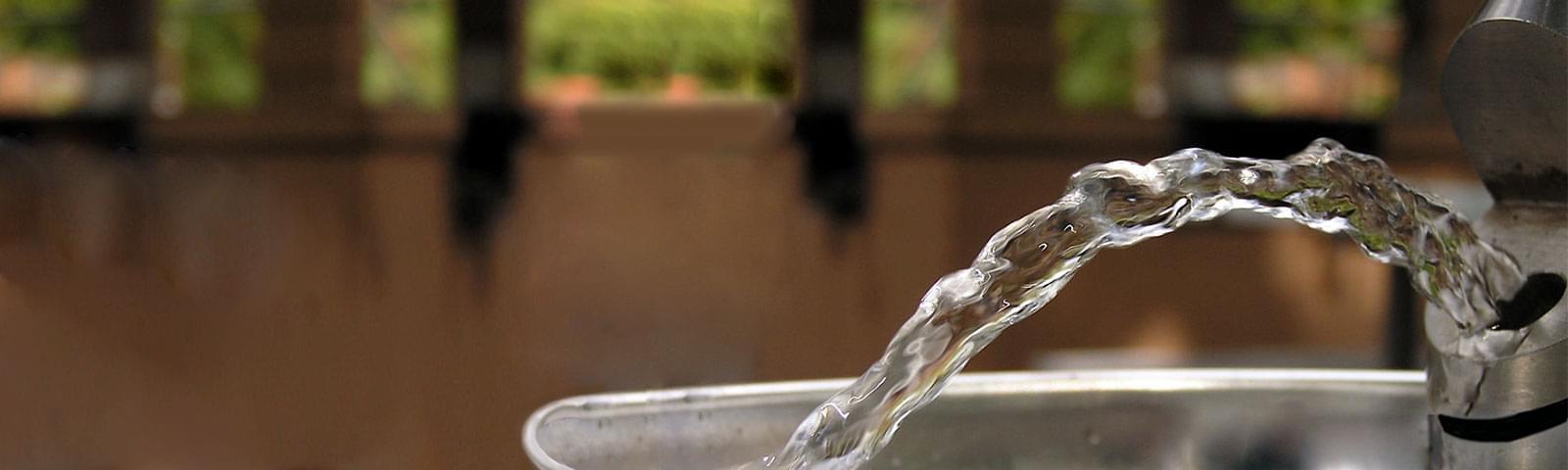
Digging out the relics from the past, we would find that the drinking water fountains originated in the ancient Greek cities. There, they were a public necessity and their water tasted of civilization. The concept soon spread its wings across Britain and the United States of America where it went through certain adornments including slanted jets, filters, chlorination and regular fountain maintenance. Population upsurge and spreading out of cities called for more public water systems and water treatment technologies which expedited the eminence of public drinking fountains. All over the years, they have crawled their way up and over the impediments caused by commercial bottled water. Their presence makes us believe that water is still a public resource and its availability in a salubrious form is a right of every living being on Earth. National Water Policy (2012) of Government of India says, "Water needs to be managed as a community resource held, by the state, under public trust doctrine to achieve food security, livelihood, and equitable and sustainable development for all" A country should not be deemed civilized if it doesn't provide its people with universal, clean and free drinking water! As a matter of fact, drinking water fountains serve the purpose of making potable community water available ubiquitously.
What are Drinking Water Fountains?
It is a Point of Use hydration water technology which aims to dispense purified and disinfected water when integrated with a purification system. It also comes with refrigeration and vandal resistance features. Drinking fountains can be installed indoors as well as outdoors. Outside, additional adaptations are used like exposed aggregate finishes, cast iron manufacture, stainless steel finishing or furnishing with heavy duty parts such as galvanized frames and steel cabinets. Therefore, their versatility seems palpable as they can camouflage themselves to adapt to harsh weathers, high moisture environment or freezing regions. Indoor drinking water fountains have a robust and sturdy construction with a sophisticated configuration. Wall mounted drinking water fountains revamp the private and semi-private spaces.
Peering down inside the contoured shell of water fountain reminiscences the era of the 1850's when the great "Metropolitan Free Drinking Fountain Association of England" opened London's first free drinking water fountain subsequently providing water to over 7000 people per day. It brought clean drinking water closer to the poor and other urban residents. The belief was that the clean, cold drinking water would wash away their alcohol consumption habit. Especially in a city, drinking fountains are mediums which connect us to nature through concealed sources of water just like springs in the picturesque environmental landscapes.
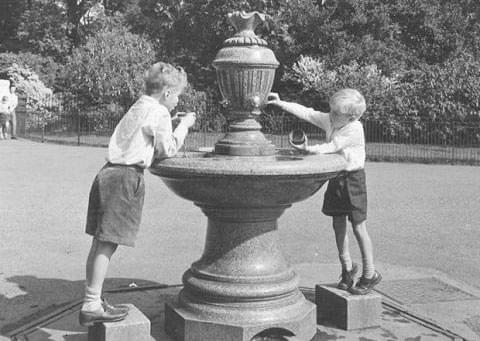
Zooming-in on the features of Drinking Water Fountains Then and Now
Erstwhile public drinking fountains were installed as "scenes of public rejoicing"; the water flow was always ON as its purpose was ornamental along with quenching of public thirst. These days, push-button operated drinking fountains are most common as they aid in conserving water and also allow time for refrigeration. The latest have sensor technology especially in bottle filling variants. Most of them come with a chilling feature wherein water passes through refrigerated coils before dispensing. The contemporary freeze-proof drinking fountains attest their long-standing reign in the extreme cold conditions.
The public artefact once now has turned into a digital genius when attached with bottle fillers. Drinking fountain with bottle filler displays the real-time number of the plastic bottles avoided, consequently steering a course to environmental sustainability. They provide a zero-calorie drink to pedestrians, tourists, children etc. on the go. A long swig at the spout or water bottle fill up, the choice is yours!
Indian Water Law
Historically, water-based statutory laws were community-based in India. After colonization, the meddling state later made water legislations with the intention of generating revenue. No legal checks were framed on the quality of drinking water and sanitation or prevention of pollution.
Contemporarily, Article 47 of the Constitution of India mentions that it is the responsibility of the State to raise the level of nutrition and the standard of living of its people and the improvement of public health. It makes it mandatory for the government to provide access to clean and free drinking water to all the citizens. Not only that, the court observed under Subhash Kumar v. State of Bihar that Right to live is a fundamental right under Art 21 of the Constitution and it includes the right of enjoyment of pollution free water and air for full enjoyment of life.
Drinking Water Fountains advocate ‘Water for All'
According to a Research (2015) which analyzed children's beverage consumption using representative data from India's National Family and Health Survey (NFHS-3, 2005–2006), "about 13 million Indian children aged 6–59 months did not drink water in the past 24 h. Among those who did not have water, roughly one-quarter consumed liquids other than breast or fresh milk, including juice and tea/coffee".
In India, public water drinking provisions include taps, hand-pumps, wells, tankers or charity-driven water coolers and dispensers. Such dispensers usually have a glass attached with the metal chain or go along with few plastic glasses that are simply rinsed with water after use. People also have a habit of drinking from cupped hands. The state of sanitation of most of the public water arrangements is quite distressing.
Those who have an idea about public drinking fountains are apprehensive about people using their pathogen-packed mouth to directly slurp water from the spout. The ‘jhootha' taboo crawls over the other aforementioned drinking water measures. What do many people do then? Buy bottled water. Yes, they pay for the supposedly free natural resource. Even then, health hazards in the form of seeping microplastics don't leave them alone.
Drinkable water fountains in the developing countries like India are at an infant stage. For those who don't know, the public water fountains are a perfect solution to water accessibility and sanitation concerns. Even in the developed countries, the idea is reviving yet again to curtail the ‘Pay and gulp' trend. Imagine how effective it could be in curbing the prevailing cavalcade of soda or fizzy drinks, bottled water, flavoured liquids and packaged juices!
Water is a life-giving liquid; the importance of water is inconceivable and ineffable. The dire thirst can make people drink from the extreme and dirtiest water sources. The little that a State can do is make water affordable, accessible and potable through Drinking Water Fountains.
END

In our minds, we almost instinctively associate the word ‘Cotton’…

As individuals and as a community, we need to be…

PoU water dispenser purifies waters through reverse osmosis and comprises…

The concept of drinking water fountain is new to India,…

