Sign up for WAE Emails


“Water- a bequest of nature” bases all innovations in curbing water crisis to make our blue planet green and sustainable.

The World Bank figure on the environmental costs incurred by India is close to 4 trillion rupees, every year.
India is the world’s second most populated country, inhabiting a fifth of the world’s entire headcount. The current population figure stands at more than 1.3 billion people living on an area of 382 people per.sq.km. The population is expected to shoot up to 1.5 billion by 2030 making India the world’s most populous country by 2024. With a population size this huge, it is obvious to the mind that there will be scarcity of natural resources needed for sustaining life, like water.
According to World Resources Institute, over 100 million people in India live in areas that have poor quality of domestic water supply. This figure is only a scratch on the surface of the real problem that the country faces. WaterAid, an international organisation working in water sanitation and hygiene recently tested the waters in India. A whopping 80% of water existing on the surface was found to be polluted.

Data from the Ministry of Urban Development, from a 2013 survey concluded that 75-80% of polluted water by volume was the result of bad practices of domestic sewage management. There were instances reported by CPCB (Central Pollution Control Board) in 2011 of untreated sewage being dumped into water bodies, which includes rivers, and their rates doubling since the turn of the decade. The Ganga and Yamuna are ranked in the top 10 of the world’s most polluted rivers.
In 2015, Centre for Science and Environment, an NGO based in New Delhi, reported river pollution to be a major cause for India’s environmental issues.
In a 2012 testing conducted by the Municipal Corporation of Delhi (MCD), 81 out of 116 samples of water tested, failed the purity and quality standards. This means that close to almost 70 % of the water being supplied to households in Delhi by the Delhi Jal Board (DJB) is not fit to drink off the tap. In a city such as Delhi, with a vast number of the population having access to only tap water, are fearing health issues. Many foreign travelers cringe at the thought of catching the colloquial disease named after the city’s capital; Delhi Belly. The tourist and the city’s population together are of the belief that the city’s water is the culprit for this name-calling.
Debashree Mukherjee, the top ranker of the Delhi Jal Board, in an article with The Wall Street Journal mentioned hard-hitting facts about the capital city’s water supply.
Sewage is just one aspect of this crisis, various industrial, domestic, and natural sources release polluting substances in the water bodies; whether done knowingly or unknowingly, is beyond the realm of the common man being affected by this escalating problem.
An estimated 1,000 Indian children die of diarrhea every day.
The issue at hand is often multi-faceted in its points of impact. There are multiple or singular reasons of action fallacy or a lack of action in totality, often social, cultural, economic, or political in nature.
In Kanpur, India’s fifth largest city situated on the bank of the river Ganga, close to 300 million litres of water is contaminated by the locus of industries such as leather tanneries, which employ a wide range of chemicals in their manufacturing processes.
According to B.D. Tripathi, a water pollution expert from the Benares Hindu University, the three chief sources of pollution in the river Ganga are “domestic waste; untreated industrial run-off, which includes heavy toxic metals; pollutants entering the river from the cremation practices along the holy river”
In general, the crux of the problem for clean water in India is formed around the following:
The citizens of the country look to the administration at the centre to bring them respite from an issue being faced in the realm of everyday sustainability. What is the government doing?
Recently, Prime Minister Narendra Modi expedited the need for environmental clearance and approval on proposals brought forward by companies and industries in India. Operations under this sanction, give free reign to anything between mining and infrastructural development w.r.t. to the construction sector.
This is probably a means to stimulate economic growth within the country, however, his zeal to make India the source of clean, sustainable and renewable energy might not be enough.
Despite straight directives from the National Green Tribunal, corporations and agencies still enjoy the freedom of concretization in the areas that come under the Green Belt. At this rate the environmental crisis in India will escalate to a point of no return. There is a dire need to harness scientific and socio-scientific expertise; a need to develop and promote an eco-friendly, non-polluting methodology and practice amongst the citizens and corporation alike.
The country also needs to develop a foolproof strategy when it comes to agriculture, industry, energy, water and; garbage and wastewater management, as these are the major sources of water pollution in the country.
A report in The Economic Times, cited research of environmental economists based out of Harvard and Yale, which suggested that over half of the Indian population could be set-up to diminish their lifespans by three years, due to the adversarial effects of breathing highly toxic air with huge levels of pollutants. Add to this mixture the country’s ongoing battle with its clean water crisis and it becomes a state of emergency. However, the government and high-ranking industries and moguls fail to understand the time-sensitive nature of this environmental plunge.
It is hard to tell how the Indian government reacts to these, if they react to it at all. The future seems very uncertain, in a country were population control, natural resource management and mortality rates are sky-rocketing in the negative space.
END
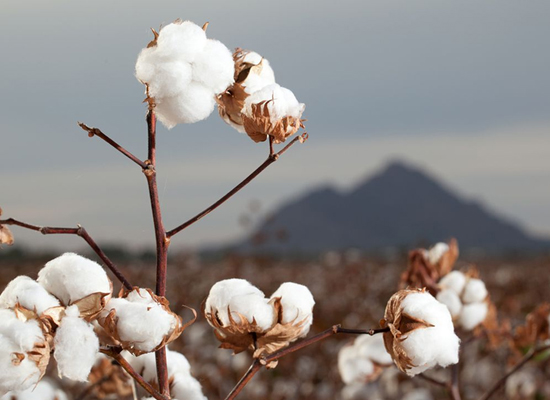
In our minds, we almost instinctively associate the word ‘Cotton’…

As individuals and as a community, we need to be…

PoU water dispenser purifies waters through reverse osmosis and comprises…

The concept of drinking water fountain is new to India,…

